Propargyl Chloride About
Product Details
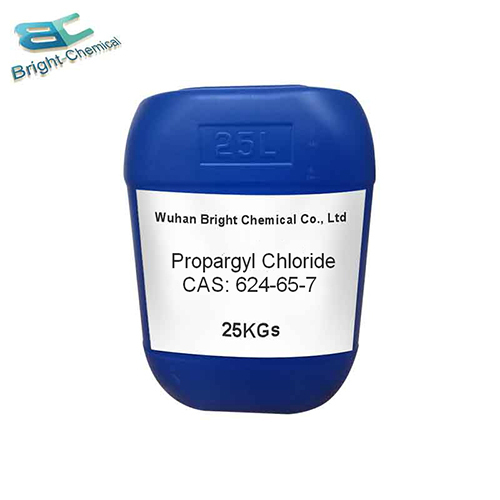
- CAS No.: 624-65-7
- Molecular formula: C3H3Cl
- Water-solubility: Little soluble in water
- Assay: 99%
- Appearance: Colorless and transparent liquid
Application: As a propargyl precursor, it is used many kinds of synthesis and pharmaceutical and electroplating chemical intermediates. In addition, it is a good corrosion inhibitor and antirust. And could be weed killer.
Key Applications and Industrial UtilityPropargyl Chloride is primarily utilized as an alkylating agent and in the synthesis of various fine chemicals. Its pivotal role in pharmaceutical intermediates and organic synthesis makes it valuable in the chemical and agrochemical industries. The compound's high purity (>99%) ensures efficiency across a range of specialty chemical manufacturing processes.
Safe Handling and Storage GuidelinesDue to its toxicity and high flammability (flash point: -10C), Propargyl Chloride requires careful handling. Wear protective gloves, operate in well-ventilated spaces, and store in tightly sealed containers away from light and heat. Following these guidelines preserves product stability and ensures a one-year shelf life under recommended conditions.
FAQ's of Propargyl Chloride:
Q: How should Propargyl Chloride be safely handled and stored?
A: Propargyl Chloride must be handled with protective gloves and appropriate safety equipment. Always work in well-ventilated areas and store the compound in a cool, dry, and well-ventilated location, away from sources of heat or light. Keep the container tightly closed to maintain product stability.
Q: What is the main industrial usage of Propargyl Chloride?
A: Propargyl Chloride is mainly used as an alkylating agent in the manufacture of pharmaceutical intermediates, specialty chemicals, and agrochemical compounds. Its reactivity and high purity make it suitable for a variety of organic synthesis applications.
Q: What precautions should be taken due to its hazardous properties?
A: Since Propargyl Chloride is highly flammable, toxic, and lachrymatory, avoid inhaling vapors or skin contact. Take precautionary measures like using chemical-resistant gloves, protective eyewear, and ensuring adequate ventilation in the workspace.
Q: When is the optimal time to use Propargyl Chloride in chemical processes?
A: Use Propargyl Chloride when you require a reactive alkylating agent for organic synthesis, particularly in situations demanding high purity (over 99%). Ensure all safety measures are in place before starting any processes involving this chemical.
Q: Where can Propargyl Chloride be effectively applied?
A: This chemical is best applied in industrial laboratories, manufacturing facilities for specialty and fine chemicals, or pharmaceutical and agrochemical production, wherever robust safety protocols are established.
Q: What benefits does Propargyl Chloride offer in synthesis applications?
A: Owing to its chemical structure and reactivity, Propargyl Chloride provides efficient alkylation capabilities, facilitating the creation of complex molecules. Its solubility in ethanol and ether further enhances its versatility in different chemical synthesis procedures.
Q: How is Propargyl Chloride classified for transport and storage?
A: Propargyl Chloride is classified under UN Number 2345, Packing Group II, with hazard classes 3 (flammable liquid) and 6.1 (toxic). It should be handled in compliance with international transport and safety regulations.




 : +8613554014698


 Send Inquiry

 Send Inquiry
 Send Inquiry
 Send SMS
 English
 Spanish
 French
 German
 Italian
 Chinese (Simplified)
 Japanese
 Korean
 Arabic
 Portuguese