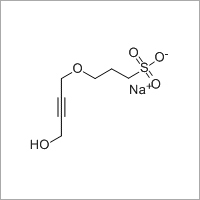
HBOPS Na 3-2-butyne-1-ol-Sulfopropyl Ether Sodium Salt) About
Our valuable customers can avail from us high quality HBOPS Na(3-(2-butyne-1-ol)-Sulfopropyl Ether Sodium Salt. This entire range is mainly known for its precise pH value, high reactivity and can be kept for long. It is prepared at our sophisticated processing unit using quality assured chemicals under the supervision of skilled professionals. It is widely used to treat iron deficiency in medical sector, to stain concrete, to color maple and for treating iron chlorosis. In order to make sure quality, this HBOPS Na(3-(2-butyne-1-ol)-Sulfopropyl Ether Sodium Salt is stringently monitored on various parameters.
Product Details
- CAS No.: 90268-78-3
- Molecular formula: C7H11O5SNa
- Molecular weight: 230.2
- Related density@20 oC: 1.11-1.16
- Refractive index@20 oC: 1.4720-1.4840
- pH value: 10.5-11.5
- Assay: 50%
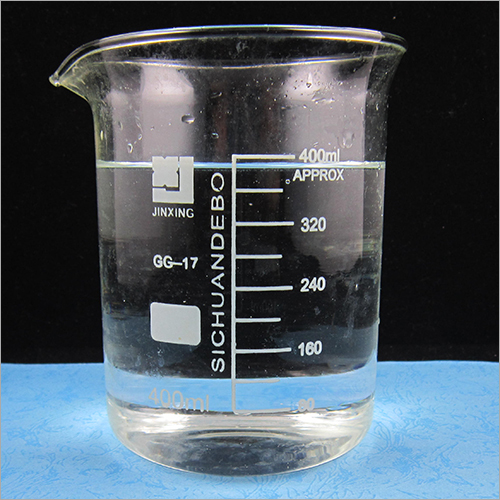
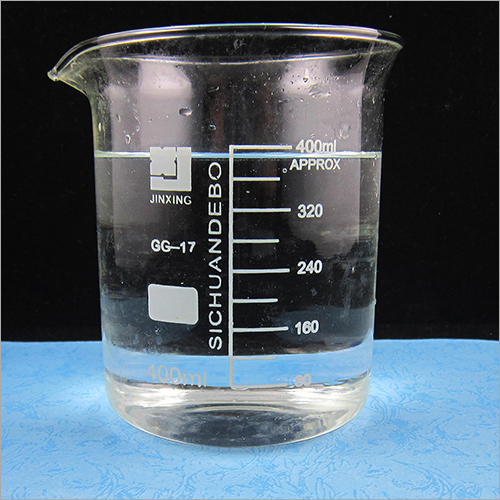
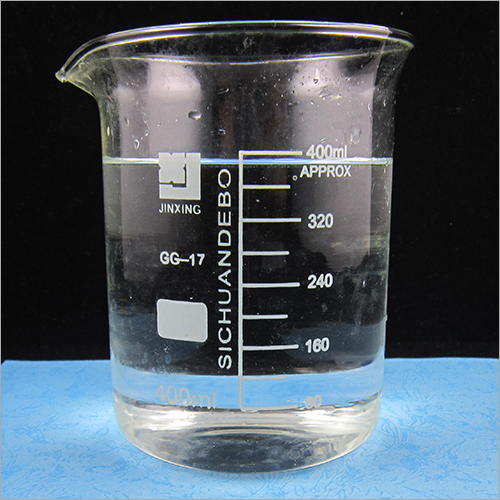
- Appearance: Brown yellow transparent liquid
Application: As an acetylenic compound, it is used as leveling agent and secondary brightener in the formulation of electrolytic watts bright nickel baths. It is usually combined with saccarin, PPS, PPSOH.
Key Applications and IndustriesHBOPS Na is primarily utilized as an additive in copper electroplating, offering improved uniformity and quality in the electrochemical process. In addition, it serves as an intermediate for synthesizing various fine chemicals, making it valuable in industrial and laboratory environments. Its freedom from hazardous classification enables broader and safer use across diverse chemical applications.
Storage and Stability GuidelinesThis compound should be stored between 2 and 8C in a sealed, dry container away from direct sunlight to maintain its analytical-grade quality. Under these conditions, it remains stable for up to 24 months. Customized packaging and bulk quantities are available to meet specific operational requirements or large-scale applications.
Physical and Chemical PropertiesHBOPS Na appears as a white to off-white powder and exhibits a neutral to slightly acidic pH (5.57.0) in a 1% aqueous solution. It is readily soluble in water, ensuring convenient handling and integration into various processes. Its reliable purity and stability make it ideal for repeatable and consistent performance in laboratory and industrial routines.
FAQs of HBOPS Na 3-2-butyne-1-ol-Sulfopropyl Ether Sodium Salt):
Q: How should HBOPS Na be stored to ensure maximum shelf life?
A: HBOPS Na should be kept in a dry, cool place at temperatures between 2 and 8C, protected from light. Following these conditions helps to preserve its stability for up to 24 months.
Q: What are the main uses of HBOPS Na in industry and laboratories?
A: This chemical is mainly used as an additive for copper electroplating and as an intermediate for synthesizing fine chemicals. It supports enhanced plating results and enables a range of synthesis processes in both laboratory and industrial environments.
Q: When does HBOPS Na need customized packaging, and what options are available?
A: Customized packaging is often selected when specific handling or storage requirements are needed, such as bulk orders or unique application needs. Options include sealed HDPE bottles or tailor-made containers based on customer specifications.
Q: Where is HBOPS Na commonly sourced or supplied from?
A: HBOPS Na is distributed, exported, manufactured, and supplied by various companies in China and is available globally through specialized chemical suppliers and traders.
Q: What is the process for using HBOPS Na in copper electroplating?
A: Typically, HBOPS Na is dissolved in water to a specified concentration and then incorporated into the electroplating bath. Its presence improves deposit characteristics, helping to achieve higher quality copper finishes.
Q: How does using HBOPS Na benefit electroplating operations?
A: Incorporating HBOPS Na as an additive in electroplating can enhance uniformity, surface finish, and overall quality of copper deposits, making the process more efficient and consistent.
Q: Is HBOPS Na hazardous to handle under normal conditions?
A: No, HBOPS Na is classified as non-hazardous under normal conditions. However, it is intended for laboratory and industrial use only. Proper laboratory safety protocols should still be followed during handling.





 : +8613554014698


 Send Inquiry

 Send Inquiry
 Send Inquiry
 Send SMS
 Call Me Free
 English
 Spanish
 French
 German
 Italian
 Chinese (Simplified)
 Japanese
 Korean
 Arabic
 Portuguese