
trusted seller
3-Chloropropyne (Propargyl Chloride)

3-Chloropropyne (Propargyl Chloride)

Price 1 USD ($)/ Kilograms

MOQ : 5000 Kilograms

3-Chloropropyne (Propargyl Chloride) Specification

  • Properties
  • It is used as an intermediate in organic synthesis. It is used for manufacturing the drug Eugenin, soil fumigants, etc. It is also a modifier for engineering plastics. Its trisodium salt is an excellent heat stabilizer for polyvinyl chloride, and its esters are also important additives for polymers.
  • Appearance
  • Yellowish liquid
  • Shelf Life
  • 2 Years
  • Physical Form
  • Liquid
  • Usage
  • Used as intermediate of organic synthesis and pesticide. Pharmaceutical intermediates for the manufacture of medicines Youjiangning, soil fumigants. Used to synthesize electroplating intermediates. An excellent metal corrosion inhibitor and antirust agent.
  • Application
  • Industrial
  • Grade
  • Industrial grade
  • Product Type
  • liquid
  • Shape
  • other
  • Storage
  • Room Temperature
  • Molecular Formula
  • C3H3Cl
  • Purity
  • 85%, 65%
  • CAS No
  • 624-65-7
  • Density
  • 1.0297 Gram per cubic meter (g/m3)
  • Molecular Weight
  • 74.5 Grams (g)
 

3-Chloropropyne (Propargyl Chloride) Trade Information

  • Minimum Order Quantity
  • 5000 Kilograms
  • FOB Port
  • Shanghai,China
  • Payment Terms
  • Telegraphic Transfer (T/T)
  • Supply Ability
  • 10000 Kilograms Per Month
  • Delivery Time
  • 7 Days
  • Sample Available
  • Yes
  • Sample Policy
  • Sample costs shipping and taxes has to be paid by the buyer
  • Packaging Details
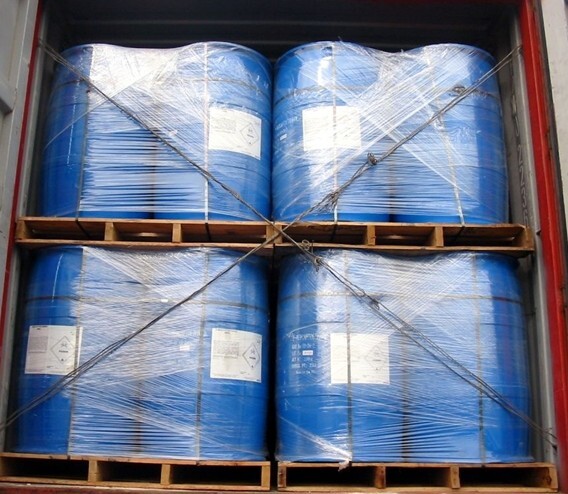
  • 180KG/DRUM
  • Main Export Market(s)
  • Asia, Australia, Central America, North America, South America, Eastern Europe, Western Europe, Middle East, Africa
  • Main Domestic Market
  • All India
 

About 3-Chloropropyne (Propargyl Chloride)

Propargyl Chloride

CAS No.: 624-65-7

Appearance and properties: Light yellow liquid.

Assay: 65% or 85%
Flammability: Highly flammable.
Explosive: 3-chloropropyne is explosive
Solubility: Insoluble in water, but miscible with benzene, toluene, carbon tetrachloride, as well as ethanol, ether and ethyl acetate.
Refractive index: 1.4320

Application:
It is used as an intermediate in organic synthesis. It is used for manufacturing the drug Eugenin, soil fumigants, etc. It is also a modifier for engineering plastics. Its trisodium salt is an excellent heat stabilizer for polyvinyl chloride, and its esters are also important additives for polymers.
2. Organic synthesis intermediates, such as those used in the production of the medicine "Youjiangning", can also be used in the production of soil fumigants.
3. Propargyl chloride is a three-carbon alkylating reagent and also an equivalent of the acetone carboene ion, a ring-increasing reagent, and when converted to a metal-organic reagent, it becomes a nucleophile for alkyne or propylene groups.


Key Applications in Industry

3-Chloropropyne is widely used in pharmaceutical, agricultural, and polymer industries. It acts as a precursor to medicines like Eugenin, soil fumigants, and specific electroplating agents. Its chemical features also make it ideal for enhancing properties in plastics and offering robust corrosion protection for metals.


Chemical and Physical Properties

This compound appears as a yellowish liquid, with a density of 1.0297 g/m3 and is supplied at high purity levels. Its presence in trisodium salt form brings excellent heat stabilization to polymers, notably polyvinyl chloride. The product should be stored at room temperature and maintains efficacy for up to two years.

FAQ's of 3-Chloropropyne (Propargyl Chloride):


Q: How is 3-Chloropropyne typically used in industrial applications?

A: It serves as an intermediate in organic synthesis, finding use in the production of pharmaceuticals like Eugenin, soil fumigants, electroplating chemicals, and various polymer additives.

Q: What are the benefits of using 3-Chloropropyne in polymer manufacturing?

A: Its trisodium salt offers outstanding heat stabilization for polyvinyl chloride, while its esters enhance the properties of engineering plastics, improving their durability and performance.

Q: When should 3-Chloropropyne be added in the manufacturing process?

A: 3-Chloropropyne is usually incorporated at the intermediate stage of organic synthesis, where it reacts to form other compounds or act as a modifying agent in resin and plastic processing.

Q: Where should 3-Chloropropyne be stored for optimal shelf life?

A: It should be kept at room temperature under appropriate containment to ensure stability, enabling a shelf life of up to two years without significant degradation.

Q: What processes require the use of 3-Chloropropyne's corrosion inhibiting properties?

A: It is utilized in metal treatment and coating processes to prevent rust and corrosion, making it valuable for maintaining industrial equipment and infrastructure.

Q: How does the purity level affect the application of 3-Chloropropyne?

A: Higher purity (85%) is preferred for applications demanding stringent chemical standards-like pharmaceutical synthesis-while 65% may suffice for less sensitive industrial uses.

Tell us about your requirement
product

Price:

Quantity
Select Unit

  • 50
  • 100
  • 200
  • 250
  • 500
  • 1000+
Additional detail
Mobile number

Email

More Products in Industrial Chemical (Drum Packing) Category

Perfluorobutyl Sulfonylfluoride

Perfluorobutyl Sulfonylfluoride

Minimum Order Quantity : 50 Kilograms

Appearance : colorless liquid

Usage : It is the homologue of perfluorooctylsulfonylfluoride and can be used to synthetize various of special perfluoro surfactants. Its potassium salt is an excellent anion surfactant and fire retardant for polycarbonate.

Application : Industrial

Molecular Formula : C4F10O2S

BCES Hydroxypropyl Butyne Diether Disulfonate Sodium Salt

BCES Hydroxypropyl Butyne Diether Disulfonate Sodium Salt

Minimum Order Quantity : 50 Kilograms

Appearance : Clear to pale yellow transparent liquid

Usage : Used as a wetting agent, dispersant, and leveling aid in various industries. Dosage and usage depend on application requirements.

Application : Other , Textile dyeing, leather processing, paper industry, dispersing and wetting applications, electroplating additive.

Molecular Formula : C9H15Na2O7S2

62-AL 2-Perfluorohexyl Ethyl Acrylate

62-AL 2-Perfluorohexyl Ethyl Acrylate

Minimum Order Quantity : 50 Kilograms

Appearance : Clear colorless to pale yellow liquid

Usage : Industrial

Application : Industrial

Molecular Formula : C12H7F13O2

PAP Propargylic Alcohol Alcoxylate

PAP Propargylic Alcohol Alcoxylate

Minimum Order Quantity : 50 Kilograms

Appearance : Clear to pale yellow liquid

Usage : Direct incorporation into formulations or use as an intermediate

Application : Other , Used as antiscaling agents in water treatment, wetting agents in agrochemicals, additives in inks, paints, coatings, lubricants and textile processes

Molecular Formula : C3H4OH(OC2H4)n


Back to top